
12 June 2025 - Air India 171
DISCLAIMER: The full Cockpit Voice Recorder Transcript has not been officially released yet. We will publish it as soon as it becomes available.
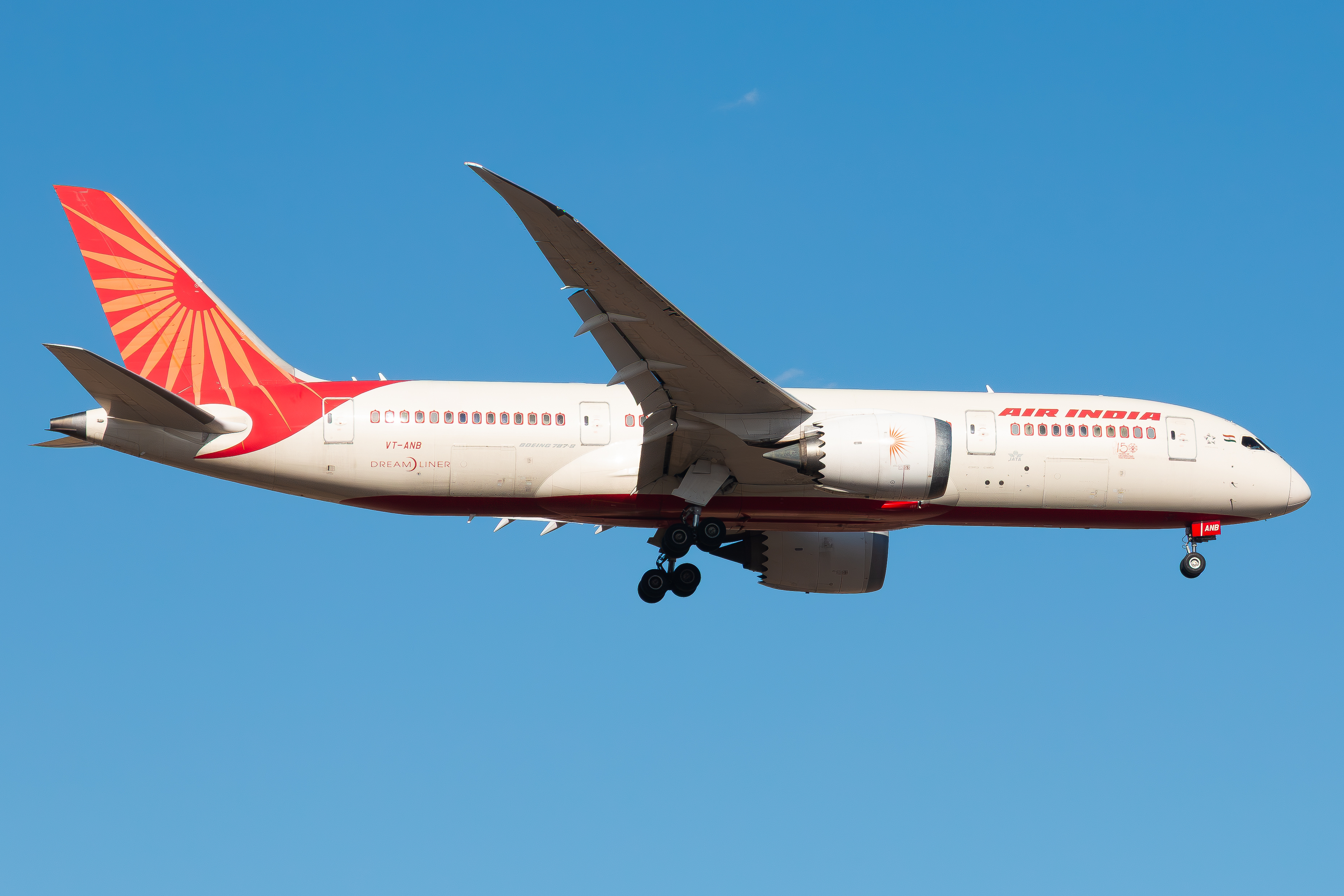
Air India Flight 171 was a scheduled international passenger flight from Sardar Vallabhbhai Patel International Airport in Ahmedabad, India to London Gatwick Airport in the United Kingdom. On 12 June 2025, at 13:39 IST (08:09 UTC), the Air India Boeing 787-8 Dreamliner operating the flight, crashed just 32 seconds after takeoff into the hostel block of B. J. Medical College in Ahmedabad, 0.9 Nm from the runway.
Of the 12 crew members and 230 passengers on board, only 1 passenger survived. On the ground, 19 people were killed and 67 others were seriously injured.
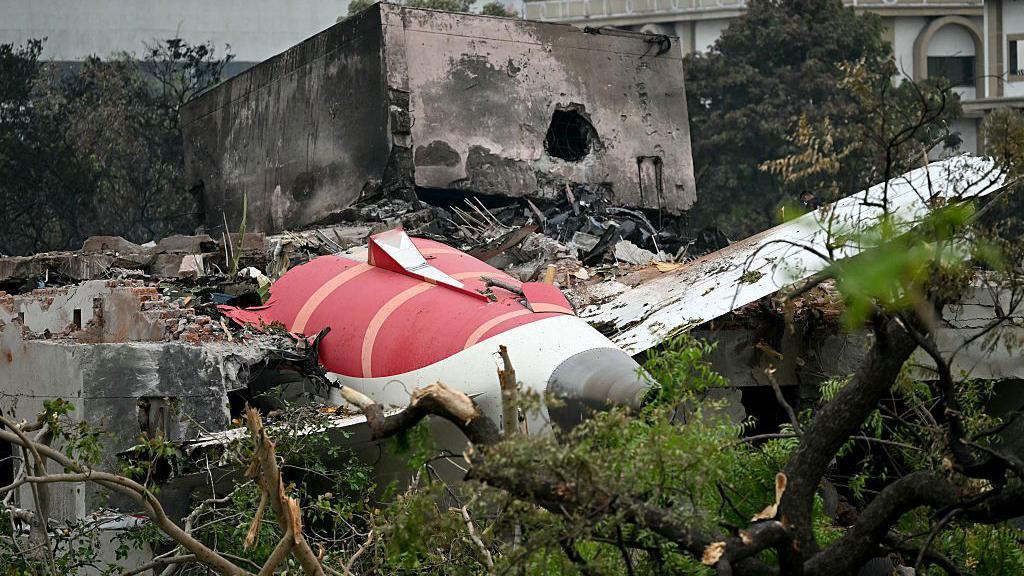
The aircraft was destroyed, and several college buildings were severely damaged by the impact and subsequent fire. This was the first fatal accident and hull loss involving a Boeing 787 since the type entered service in 2011.
On 12 July, the AAIB released a preliminary report outlining its initial findings. After a 62-second takeoff roll, the aircraft rotated at an airspeed of 155 knots, and lifted off 4 seconds later at 13:38:39 IST. As the aircraft reached its maximum recorded airspeed of 180 knots 3 seconds after lifting off the runway, both fuel control switches sequentially moved from RUN to CUTOFF, 1 second apart. Both engines immediately shut down and stopped producing thrust. Airport CCTV showed no significant bird activity in the flight path, and that the aircraft began losing altitude before crossing the airport perimeter.
One pilot was heard on the cockpit voice recording asking the other why he had "cut off", with the other pilot answering that he "did not"; the report did not specify who said what. According to flight recorder data and airport CCTV footage, the ram air turbine (RAT) deployed automatically and began producing emergency hydraulic and electric power 5 seconds after the first switch moved. The first switch returned to RUN about 10 seconds after it had moved to CUTOFF, and the second switch returned to RUN about 4 seconds after that. Each engine's full authority digital engine control (FADEC) then automatically attempted to restart them.
About 9 seconds after the second switch returned to RUN, one of the pilots issued a mayday call, reporting a loss of thrust. An air traffic controller requested the flight's call sign, but received no response. The cockpit voice and flight data recordings ended 6 seconds after the mayday call, 32 seconds after takeoff, at 13:39:11. At that point in time, the first engine had re-lit and was beginning to spool up. The second engine had also re-lit, but its core speed continued to fall while its FADEC introduced additional fuel in an attempt to recover thrust.
The preliminary report noted that the FAA had issued a Special Airworthiness Information Bulletin (SAIB) in 2018, warning that fuel switches similar to those on the 787 had been installed on Boeing 737 aircraft with the stop-lock mechanisms disengaged, the exact nature of which was not described. Air India said it had not performed the recommended inspections because they were not mandatory. The incident aircraft's maintenance records showed that its throttle control module had been replaced in 2019 and 2023 for reasons unrelated to the fuel switches, and that no fuel switch defects had been reported since then.
The throttle levers were found in the idle position when recovered after the crash; however, the flight recorder data showed that both had been kept at takeoff thrust until impact. The recovered flap controls and flight recorder data showed that flaps had been properly set for takeoff at five degrees. The report did not identify any mechanical faults nor recommend safety actions for operators or manufacturers of the 787 or its GEnx engines.
>>> DOWNLOAD <<< the Preliminary Accident Report
Note: The full Cockpit Voice Recorder Transcript has not been officially released yet. We will publish it as soon as it becomes available.
Search the database
